Mars
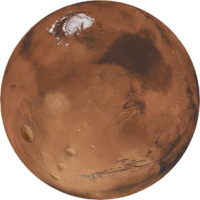
Mars is named after the Roman god of war, Mars, due to its reddish color, which suggests blood and battle. Mars is the fourth planet from the Sun and the only one entirely inhabited by robots.
♂ Is the symbol for Mars, the arrow coming out of the circle is to represent a spear.
List of Satellites
Topic Specific Questions
What does Mars’ lack of mountain ranges, and the presence of such large volcanoes have to do with its interior?
Because Mars only has a one plate crust, magma can build up in one location for a prolonged period of time. Causing large volcanic structures like the Olympus Mons.
What evidence is there that the climate on Mars has changed?
There’s dried up riverbeds, lake beds and some suspect even oceans of water that used to be on Mars. However it’s now just a cold desert of rocks and dust. The only ice is at the poles and there is a substantial amount of ice that could be melted and maybe fill the oceans once again.
Explain the origin of Phobos and Deimos, and several ways in which they are different from Earth’s Moon.
Phobos and Deimos are Mars’ moons. They are significantly lamer than our moon. Believed to be stray asteroids that just got caught up in Mars’ gravitational pull. They are smaller and one of them, Phobos. Is actually moving towards the red planet instead of our moon which is moving away.
Fact Sheet!
Mass
Equatorial Radius
Orbitial Radius
Day Length
Year Length
Axial Tilt
Average Surface Temperature
Average Surface Pressure
11% of Earth’s
3,390 km (2,106 miles)
1.5 Astronomical Units
24.6 Hours
687 Earth Days
25 Degrees
-65 C
6.1 Millibars
Gallery (hover over the images for a description)
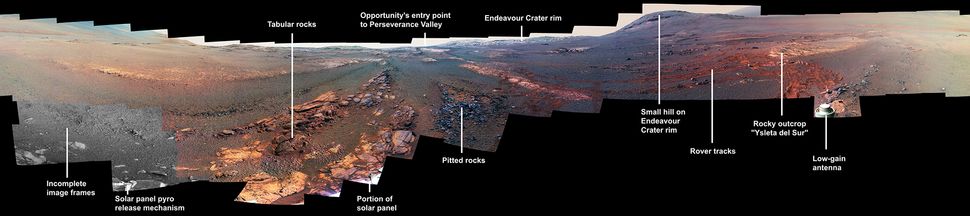
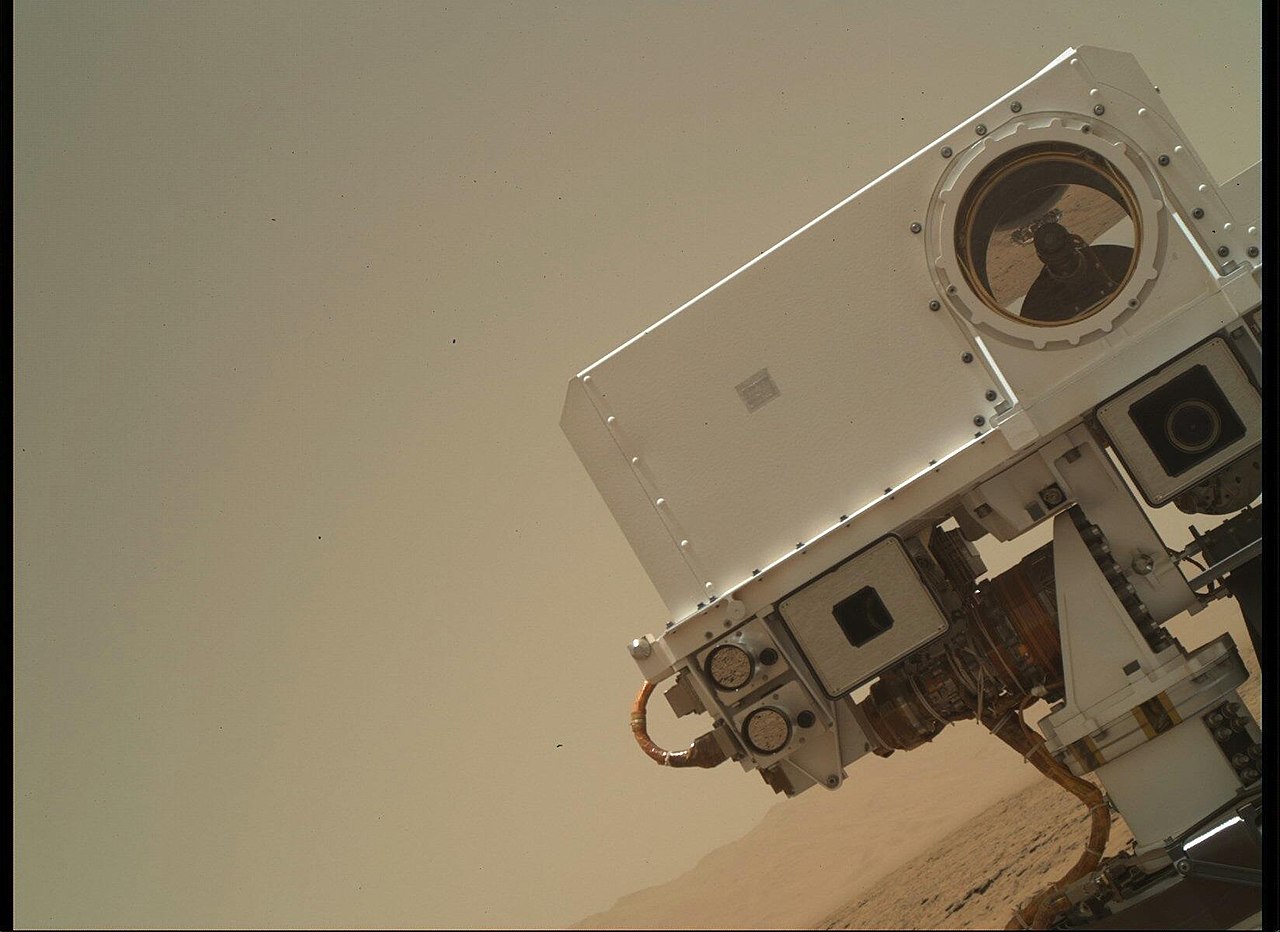
Curiosity Rover!


Olympus Mons

Mars is not currently volcanically active, but it has the largest volcanoes in the solar system, like Olympus Mons, which suggest a history of significant volcanic activity. While there is no evidence of recent eruptions, some studies suggest that minor volcanic activity may have occurred within the last few million years. Mars is primarily composed of silicate rock and metals, with a crust rich in iron, magnesium, aluminum, calcium, and potassium. Its core is believed to be made of iron, nickel, and sulfur, though it is unclear whether it is fully solid or partially molten.
Could we inhabit Mars one day?
Humans could potentially inhabit Mars in the future, but it would require advanced technology to create sustainable habitats, generate oxygen, and protect against radiation. Challenges like extreme cold, lack of a breathable atmosphere, and limited water supply make long-term settlement difficult but not impossible.
What's the magnetic field like on Mars?
Mars does not have a global magnetic field like Earth, but it has patches of strong, localized magnetic fields in its crust, remnants of an ancient field that likely disappeared billions of years ago.Home